The Best SEO URL Structure
Before we dive into the best practices on how to build a good SEO URL Structure, let us start with the basics and explain what a URL is and what it is divided into.
The term URL is short for Uniform Resource Locator, and it is the address you enter in order to access a certain website.
Having an optimized SEO URL is important for your site viewers, as it divides your website's hierarchy and clarifies the content of each page. It is also important for your website's ranking, because just like it clarifies the structure of your pages to users, it clarifies it to search engine algorithms too.
URL Structure
In the image below, is a common URL structure type commonly used.
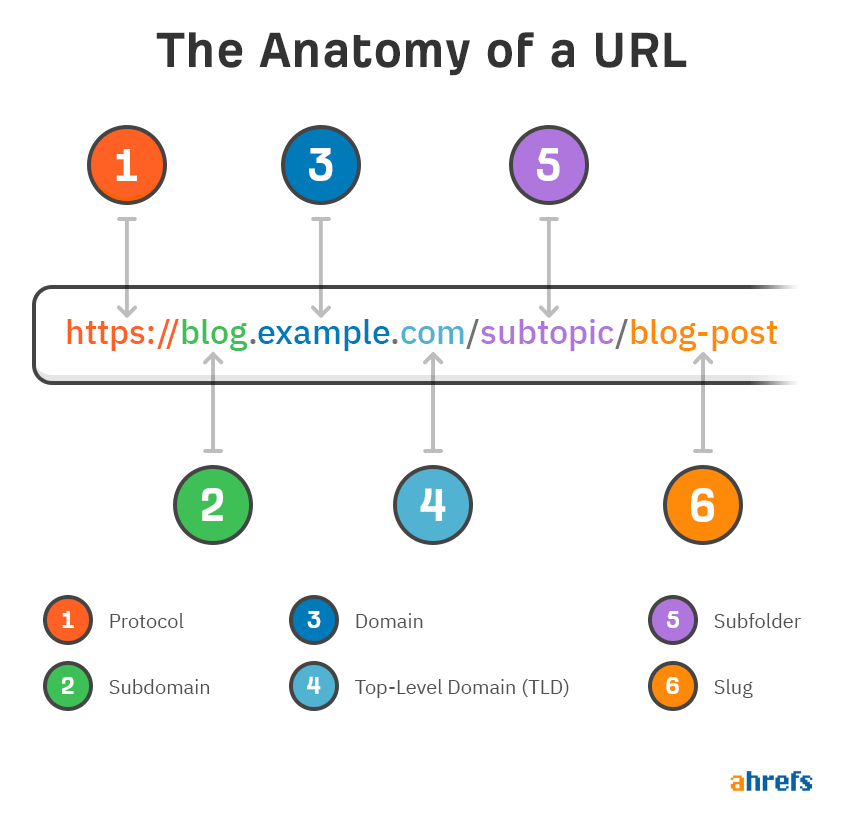
Not necessarily all websites follow the same URL structure. It depends on the type of the website and its needs. For example, a blog might use a different structure than a government website or an e-commerce website.
How to Create a SEO URL Structure
Good URL Structure
Use the https Protocol
Hide the Subdomain (www)
Optimal URL Length
Use Keywords
Do not Include Non-ASCII Characters & Capital Letters
Use Hyphens (-) as Separators
See for yourself the difference below:
https://best4seo.com/our-services/seo-services/
https://best4seo.com/ourservices/seoservices/
https://best4seo.com/our_services/seo_services/
Remove Stop Words
Redirect Links
Add a 301 redirect so that when a user clicks on your page's old URL, he/she will be redirected to the new one. You can check out some SEO plugins, they often include tools that help you with redirection. However, do not overdo it with redirecting links because it slows down the speed of your website, which is bad for SEO
.
Spell Out Numbers
For example, if a number is to cause some confusion, either spell it out, or buy the domain name of the spelled out version too. This way you guarantee, that even if users confuse your domain name for example, Best 4 SEO or Best For SEO, they will be redirected to your website.
Readable By Humans
Match The URL To The Title
The DONTs of SEO URL
After we have covered the DOs for making a SEO URL structure, it is time we discuss the DONTs.
- Create Complicated URLs: Complex URLs that make no sense do not give the user the idea of what your page is talking about and that affects your website negatively.
- Ignore the Canonical Tag: These tags tell search engines when you have duplicate pages one of which is the ''Master'' page.
- Have Multiple Homepage URLs: Many web developers ignore the fact that there should be one link to the homepage. If you have multiple, you can use the 301 redirections to fix this issue.
- Use Stop Words: Even if a stop word (the, is, a, an, or, and...) is part of your keyword, you should not excessively use them in your pages' URLs. It is unnecessary because search engines do not consider these words anyway.
- Have Lots of Redirects: Only use 301 redirects when necessary like changing the URL or moving the content to a new page. Make sure you do not overdo it with the redirects like directing to an invalid page or having a series of redirections for the same page, this is bad for your site.
- Overdoing It With Keywords: Do not stuff keywords inside a URL to rank for those keywords. It will do more harm than good as the URL will appear less user-friendly.
Are SEO URLs Still Important in 2022?
The definite answer is yes, having an SEO URL is definitely still important to Google bots as they crawl your website.
Have you ever viewed seen a URL that makes absolutely no sense?
For instance, first, it contains the website’s domain name and then just a bunch of characters stuck together.
Not only does this look ugly, but it also distorts the content on your page and confuses users.
Search Engines care a lot about the user experience and yes they can analyze the level of satisfaction each user has when accessing a certain website.
A URL that is not SEO-friendly will decrease the level of user satisfaction which will ultimately harm your website’s rank.
Over the past few years search engines have become more and more aware of the human user's experience and are using algorithms to assess SEO practices of online websites accordingly.
SEO URL: A Conclusion
These were the ten most important things to keep in mind while developing an SEO-friendly URL structure for the pages or articles on your website. Because the function of your website is the most important consideration, the structure that you choose is irrelevant to the decision.
If you do follow these 10 best practices, however, you will have a URL that is optimized for search engines and will earn you a higher ranking in the results of searches.

Comments
No comments yet. Be the first to write one.
Leave a comment